At the end of January I decided to fully dive into the world of Web 3.0 and blockchain, with the idea of creating my own cryptocurrency.
I was moving fast, learning concepts from everywhere and had a thousand ideas to implement… but I always reached the same point: one idea here, another concept there. I was accumulating ideas, but not taking action.
I asked myself the classic question: Why (see: Start with a Why). And that’s when I realized something important.
I wasn’t starting because I kept telling myself I had to do things properly. If I was going to launch a coin, it had to be done well. After all, it was about my image, right?
The problem with this mindset was that I was learning a lot, accumulating information, learning and learning… but always telling myself I would apply all of this at the end of the year.
I started getting frustrated. I wanted to move into creation, but my own mind was blocking me because I felt I wasn’t ready yet. I had the ideas at 60%, but I was missing that 40%.
I wasn’t starting because I kept telling myself it had to be “done right”. If I was going to launch a coin, it had to be perfect, right? In the end, it was about my image… or at least that’s what I believed.
Then I remembered a quote that left a mark on me as a teenager, attributed to Mohamed Ali:
“Jumping into the water five minutes later won’t make it warmer. It’s when you’re inside that it stops feeling cold.”
I’m not even sure Ali actually said this, but every time I procrastinate, I remember this sentence.
Another example that came to my mind while writing this post is the Picasso anecdote.
He made a quick sketch on a napkin while having coffee at a bar and then put it in his pocket.
A woman saw it, came to him and asked if she could buy it. Picasso said:
— Ok, that will be 5,000 euros.
The woman, surprised, replied:
— But it only took you 15 minutes?
And Picasso answered:
— It didn’t take me 15 minutes. It took me 60 years.
I don’t know if the story is exactly true, but I like it because it perfectly illustrates the idea: quantity ends up creating quality.
People used to believe artists had a “gift”. Personally, I think Picasso could do that because during those 60 years he produced many works that were not that good. As we say in Spanish : practice makes the master.
I thought about all this for several hours. The turning point came when, for the fifth time, I searched for the example of the ceramic pots that two groups of students had to make.
I found it in Art & Fear and it also appears in Atomic Habits. If you don’t have time to read the books, here is the essential idea:
(I made the images with Dezgo and another AI, so don’t expect great illustrations 😅)

A teacher divided the class into two groups: The group on the left would be graded only on quantity — the more they produced, the better. The group on the right would be graded only on quality — they only needed one perfect piece to get the highest grade.
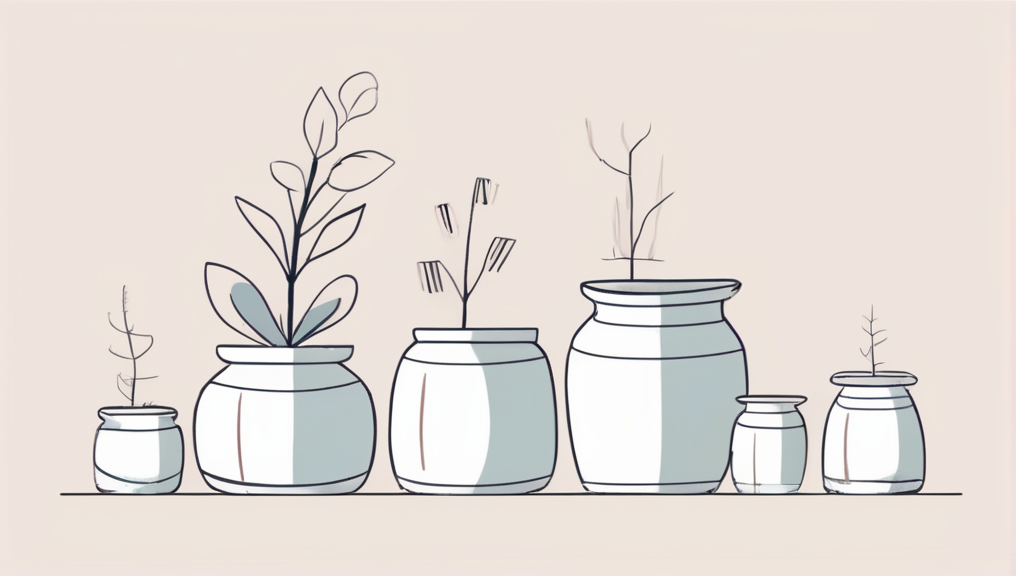
During the course, the quantity group never stopped producing pieces: they tried, failed, adjusted techniques and learned in the process. Their focus was to produce a lot, experiment and improve with each attempt.
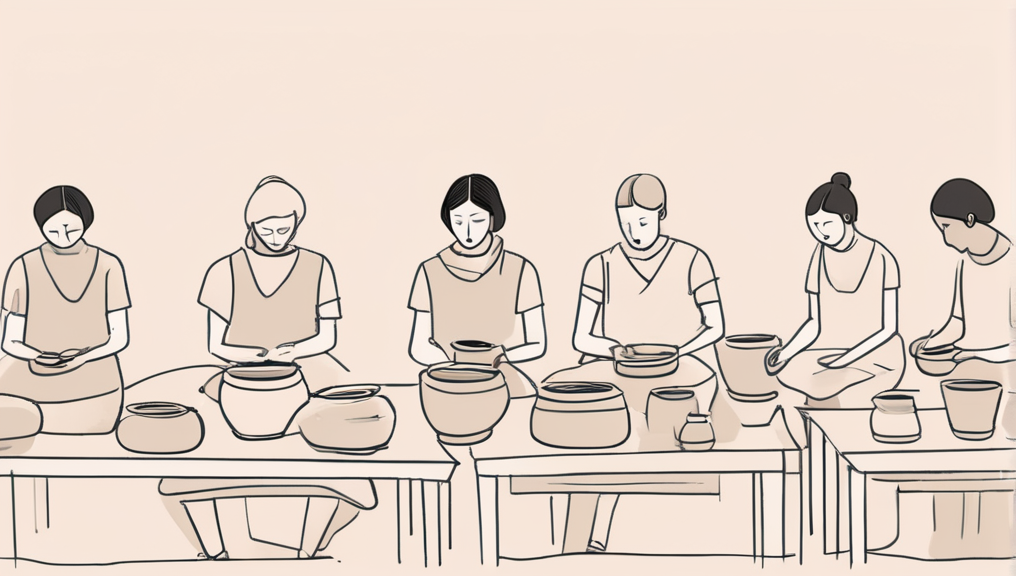
The quality group, on the other hand, spent the time theorizing about the perfect piece and waiting for the right moment. They ended up with few attempts and many ideas that never materialized. The visible mistakes of the other group were, in fact, their practical school.
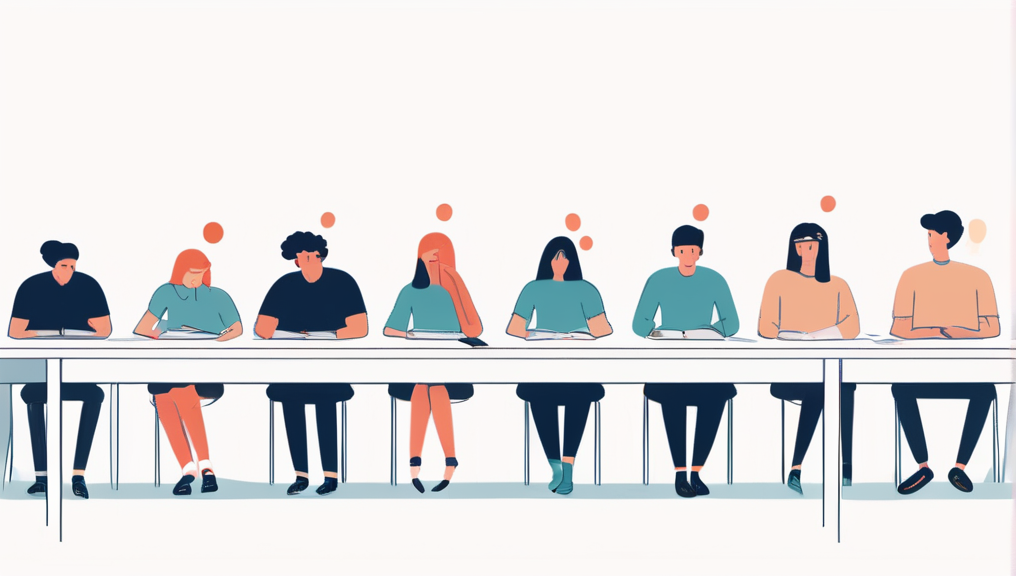
In the end, the best pieces came from the pile of the quantity group. The lesson is clear: producing a lot, failing and learning leads to improvement. The search for perfection paralyzes.
Quantity leads to quality.
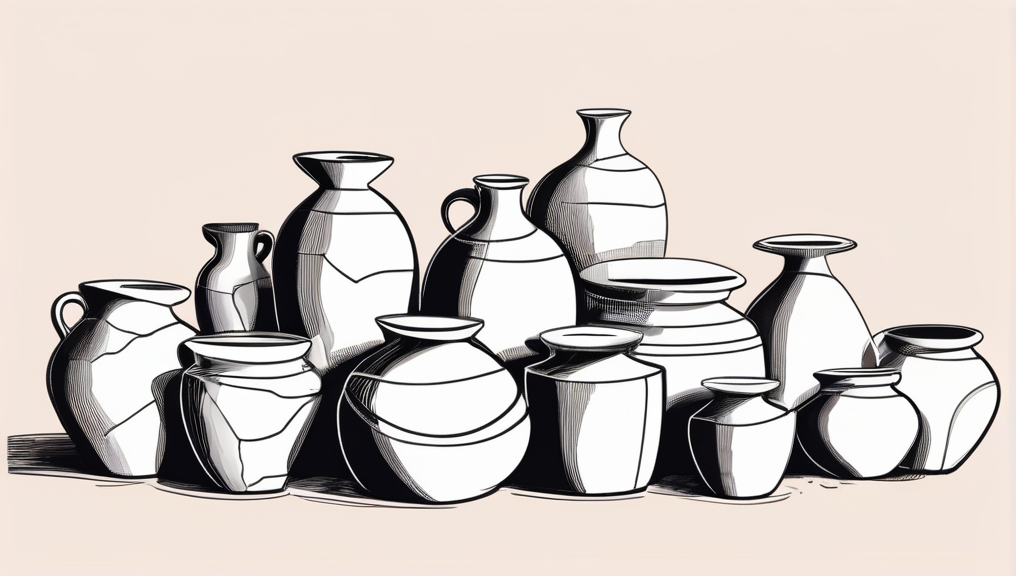
Remembering this story, I made an important decision: I will stop the infinite theorizing method. I will simply try to build something, then see the mistakes I made, learn from them, improve, and move to the next version.
As Nelson Mandela said:
“I never lose. I either win or learn.”
After thinking that my coin would have the name of a special type of wood (details saved for later), I realized that before reaching that point I needed to build something that takes less time than a tree trunk, and that, like wood, is renewable and historically used as a way to exchange value.
(The idea of “renewable” is that the project should be reproducible by anyone. It would take time, but it would be reproducible and without supply limits.)
And after thinking for a few minutes, it became clear: Barley (wheat).
I won’t go into the history of how wheat was used in ancient economies, but it perfectly matched my metaphor of building an evolving currency over time.
The first thing I set was a deadline: March 1st.
Then I simply sketched some things I already knew and made a planning.
Since this was the first digital currency I would ever build and I only had one month (February), I had to make a decision: even though I don’t like centralization at all, I would have to design a system largely managed by me.
To respect the deadline, instead of creating something where anyone could join at any time, create nodes, promote it, etc., I chose something much simpler: start with 5 friends during the first two weeks, and add 5 more during the rest of the development.
The project would last 10 weeks. Each week, a supply of 10 coins would be added to the main project account and, based on defined parameters or the transactions made, I would execute the transactions on the blockchain.
To ensure exchanges between participants, I planned to create progressive difficulty games and challenges where those who succeeded would be rewarded. Those who contributed useful ideas or work would be valued, and each participant could propose goods or services, set prices and negotiate with others.
The idea was very good, of course.
But there was a big problem:
How the hell was I going to make all this possible?
How was I going to build a blockchain?
How was I going to secure addresses?
How was I going to implement hashing functions, the mempool, key management and, above all, cybersecurity?
How was I going to create the validation protocol and message exchange between people who didn’t know each other?
A million things to do… and things I had never done in my life.
But that was exactly the goal: to start from zero, even without enough knowledge or experience.
This pseudo-text was written on February 1st. Little by little I will add updates about the project.
In the meantime, you can check the whitepaper I already started writing here:
[Link to white paper]
Just before publishing this post, I was showing it to a friend of mine who studies medicine and is deep into neuroscience. He explained something that fits perfectly with this idea.
The first time we do something new, the amygdala (the part of the brain linked to fear and alertness) gets activated and our body almost interprets it as a threat.
But when we repeat the same action many times, the brain starts recognizing the situation as familiar territory and stops triggering that alert response.
he real difficulty doesn’t change… what changes is our perception of the difficulty. That’s why soldiers, athletes, pilots, or even surgeons repeat the same gestures over and over again:not only to improve technique, but so that when the real challenge comes, the brain simply says, “I’ve seen this before, I can handle it.”
Tanx Geor… 😉